
Is IPTV legal? What matters is the content, not the technology
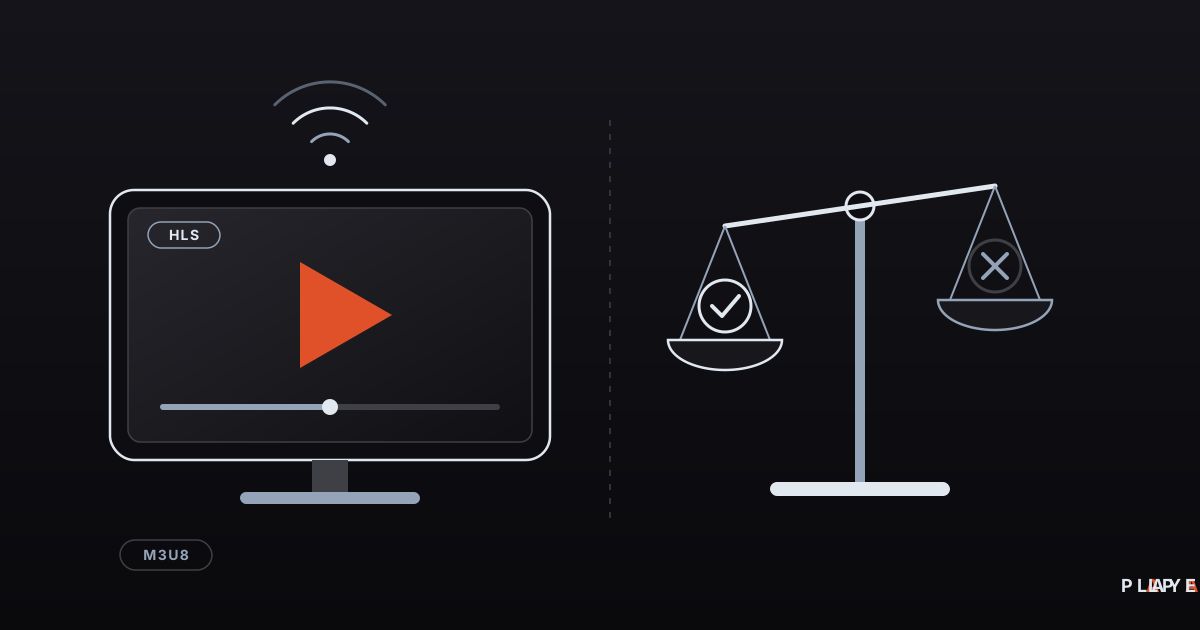
Short answer: IPTV means delivering television over internet protocol, and the technology itself is legal. What breaks the law is distributing or selling channels, matches, or films without the rights holder's permission, and using such sources carries legal and security risks. Licensed services with official apps are the safe route. Media players like Alpa Player provide no content; they only play sources you have the right to use.
Key takeaways
- IPTV is a delivery technology; whether it is legal depends on whether the content it carries is licensed.
- Copyright laws in most countries prohibit offering, selling, or sharing channels, matches, films, or series without the rights holder's permission.
- Licensed services have an official app store listing, publish company details, issue receipts, and charge realistic prices.
- A player app does not supply content; with Alpa Player, the user adds a source they have the right to use and is responsible for it.
- Your own videos, openly licensed works such as Creative Commons material, and content shared by your organization are lawful things to play.
People who search for "is IPTV legal" are usually asking two questions at once: is the technology a problem, or is the stream they are watching the problem? The short answer is that IPTV is a delivery method and is legal on its own. The legal question comes from the content it carries, specifically whether the people sending it have the right to do so.
This guide explains what IPTV is, how licensed and unlicensed services differ, what copyright law generally says, and how you can protect yourself. Alpa Player, built by Alpa Yazılım, is a media player and nothing more: it does not provide, sell, or host any content. This article is not legal advice. For your own situation, talk to a qualified lawyer.
What is IPTV and how does it work?
IPTV, short for Internet Protocol Television, is a way of delivering television over IP networks instead of traditional cable, satellite, or antenna. The video is cut into small pieces, sent over the internet, and reassembled by the player on your device.
Plenty of ordinary services work this way: television packages from internet providers, broadcasters' own apps, in-room TV in hotels and hospitals, and corporate training channels. Technically, streams are often delivered with a format such as HLS, and channel addresses can be collected in an M3U playlist. None of that is unlawful. A file format or a protocol cannot make a stream legal or illegal.
So, is IPTV legal or not?
The technology is legal; offering or watching content without the rights holder's permission is not. There are two very different worlds built on the same technology: licensed services that have agreements with broadcasters and rights holders, and unlicensed (pirate) sources that distribute channels without any such agreement.
Think of printing. A publisher and someone running off pirated copies of a novel use the same printing press. The press is not illegal; copying a book without permission is. Video streams work the same way, which is why a better question than "is IPTV legal?" is "does the person offering this stream have the right to offer it to me?"
How do licensed and unlicensed IPTV services differ?
A licensed service is a recognizable company that delivers content under agreements with broadcasters and rights holders, while an unlicensed one distributes content without those rights and usually hides who is behind it. You can often spot the difference before you pay anything.
| Question | Licensed service | Unlicensed (pirate) source |
|---|---|---|
| Who runs it? | A company with a business name, address, and contact details | An unknown seller, often a social media or messaging account |
| Where do you get it? | The official app store and the company's own website | A file downloaded from a random link |
| How do you pay? | Card or a known payment provider, with a receipt or invoice | Bank transfer, cryptocurrency, or a personal account, with no receipt |
| What does it cost? | A realistic price that reflects content costs | Far below market price, or "lifetime" promises |
| What paperwork exists? | Terms of service, privacy policy, customer support | None, or the seller disappears after a while |
| How stable is it? | Service commitments and regular updates | Sudden shutdowns and constantly changing addresses |
For a longer checklist, see our guide on how to tell whether a streaming service is licensed.
Why is unlicensed streaming against the law?
Unlicensed streaming violates rights that the law gives to creators, producers, and broadcasters. Copyright laws in most countries give rights holders the exclusive right to copy, distribute, and communicate their works to the public, and broadcasters usually hold related rights over their transmissions. Türkiye is one example: Law No. 5846 on Intellectual and Artistic Works is its main copyright statute, and Law No. 6112 sets the rules for radio and television services under the supervision of the regulator RTUK.
Broadcasting itself is also a regulated activity in most places. Someone who runs a channel service normally needs permits or licenses from a national authority, so it is not something anyone can do freely.
Consequences for infringement can include civil damages, fines, and in some jurisdictions imprisonment. The exact outcome depends on the country, the scale of the violation, and the court, so we will not quote figures here. For up-to-date wording, consult the official legislation of your country (for example the WIPO copyright pages give a global overview) and a qualified lawyer.
What if I am only a viewer?
The person who offers and sells an unlicensed stream is the clearest violator, but viewers are not entirely outside the picture. How far an individual viewer's liability goes differs by country and by case, so "watching is always fine" would be an unreliable thing to say.
Even where the law is unclear about viewers, the practical risks are real. Unlicensed services can disappear without notice, take your payment with them, expose your card and account details, or put malware on your device. We cover these in the risks of pirate streaming. The Alpa Player legal notice is also direct on this point: using, buying, selling, sharing, or rebroadcasting lists and accounts that offer channels, matches, films, or series without the rights holders' permission violates the law and Alpa Player may not be used for it.
Is a player app the same as a streaming service?
No. A player is software that displays whatever source you give it, while a streaming service is the company that supplies the content itself. This difference matters for who is responsible for what, and we explain it in detail in are media player apps legal.
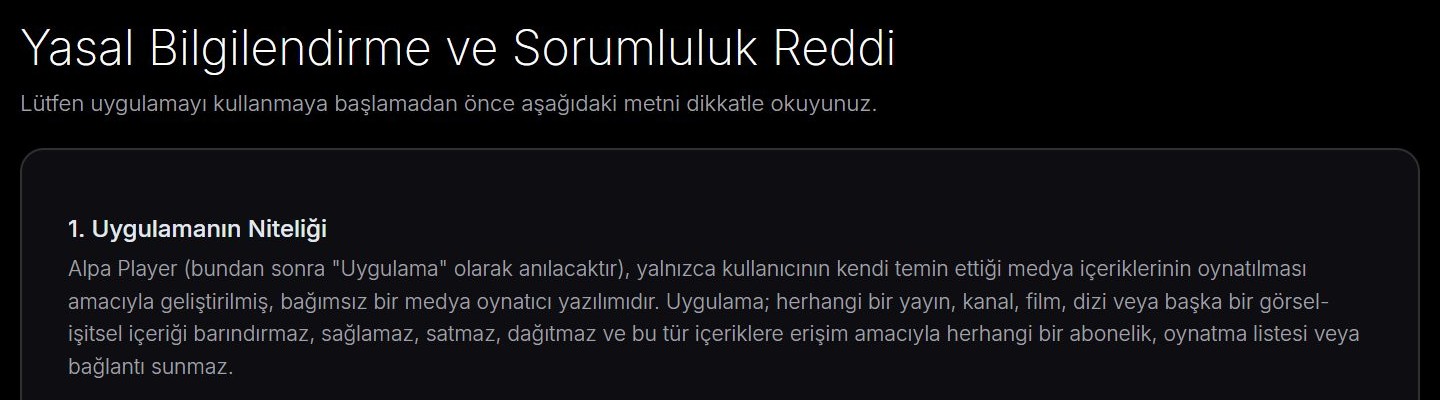
Alpa Player is a free media player developed by Alpa Yazılım. It is not a streaming service. The app contains no ready-made channels, films, series, or lists, and Alpa Yazılım does not sell, host, or distribute any. The user adds a source they have the right to use (a playlist address, a single video link, an account from their service provider, or an institution account), and the content comes straight to their own device.
Remote upload works like this. Typing long addresses with a TV remote is painful, so the user enters the MAC address and the 6-digit key shown in the app on the remote playlist upload page, adds their source, and confirms a responsibility statement. Every upload is logged with the IP address and the MAC address, and the user who uploads is responsible for the lawfulness of that source.
Where can you legally play content?
Lawful content is anything you clearly have the right to use, and there is more of it than most people expect. The list below covers the main kinds you can safely add to a player.
- Services you bought or subscribed to: using their official apps is the safest path, with an account, an invoice, and a support channel behind it.
- Your own videos: you hold the rights to footage you filmed yourself. See copyright and personal media for details and exceptions.
- Openly licensed and public-domain works: films released under Creative Commons licenses, such as the Blender open movies, can be watched as long as you follow the license terms. The Alpa Player browser demo uses openly licensed samples like these, and free test video streams lists more.
- Institution content: schools, hospitals, hotels, and municipalities can share lecture and information videos they have the right to publish with their own students and staff through the free institution panel.
How can you protect yourself?
The easiest protection is asking a few simple questions before you pay or enter any personal details. Stopping to check takes a few minutes and removes most of the legal and technical risk.
- Are the company's name, address, and contact details clearly published?
- Are you installing the app from an official app store, or from a file someone sent you?
- Will you receive an invoice or receipt after paying?
- Does the price match what the content realistically costs?
- If the seller promises "no legal trouble," can they show a document that proves it?
If you cannot answer yes to most of these, think again. A licensed alternative always exists, and if you simply want to try a player, you can download Alpa Player for free and play your own files or openly licensed samples.
To sum up who is responsible for what: the service provider answers for the content license, the player's developer answers for describing the software honestly, and you answer for the lawfulness of the source you add. Alpa Yazılım reserves the right to suspend the related institution account, license, and device access if it finds or is notified that the app is being used for unlawful content. Again, this article is not legal advice; for certainty, read the actual laws and ask a professional.
Frequently asked questions
Is it a crime to use IPTV?
Using IPTV technology is not a crime, and many licensed television services rely on it. The problem is content offered without the rights holder's permission. Offering, selling, or sharing such streams can violate copyright and broadcasting laws. What happens in a specific case depends on your country and the facts, so ask a lawyer for advice.
What does a licensed IPTV service look like?
A licensed service is run by an identifiable company with a business name, address, terms of service, and customer support. Its app is in the official store, you get an invoice after paying, and the price is realistic. Our checklist on how to spot a licensed streaming service goes into more detail.
Is Alpa Player an IPTV service?
No. Alpa Player is a free media player developed by Alpa Yazılım. It includes no channels, films, series, or lists, and it does not sell, host, or distribute content. Users can only add sources they have the right to use. You can get the app from the download section.
Who is responsible for a playlist I add to the app?
You are responsible for the lawfulness of every source you add. With remote upload, the user enters the MAC address and key on the website, adds the source, and confirms a responsibility statement. Each upload is logged with the IP and MAC address. Alpa Yazılım supplies no content; what the app shows comes from the source the user added.
Can I watch my own videos or openly licensed content?
Yes. Videos you filmed yourself, Creative Commons works, and public-domain material are lawful to play, provided you follow any license conditions such as crediting the creator. The browser demo of Alpa Player works with openly licensed samples of this kind.
What should I do if I am unsure whether a source is legal?
Before paying or entering personal details, ask the seller for company information and proof of content licensing, and check whether the service exists in an official app store. If you cannot get clear answers, do not use the source and choose a licensed option instead. For legal certainty, consult a lawyer.
Sources
Related articles
 Legal use
Illegal streaming risks: legal, security, quality
Illegal streaming risks go beyond the law: malware, payment fraud, and data theft are real concerns. A calm, honest guide to what can go wrong.
 Legal use
Are media player apps legal? Who is responsible
Are media player apps legal? Yes, the software is; responsibility starts with the content. See how Alpa Player supplies none and logs every upload.
 Legal use
Copyright and personal media: what you can play
Copyright and personal media explained: your own videos, purchased content, public domain, and Creative Commons works you can play with confidence.