
Copyright and personal media: playing your own and openly licensed videos
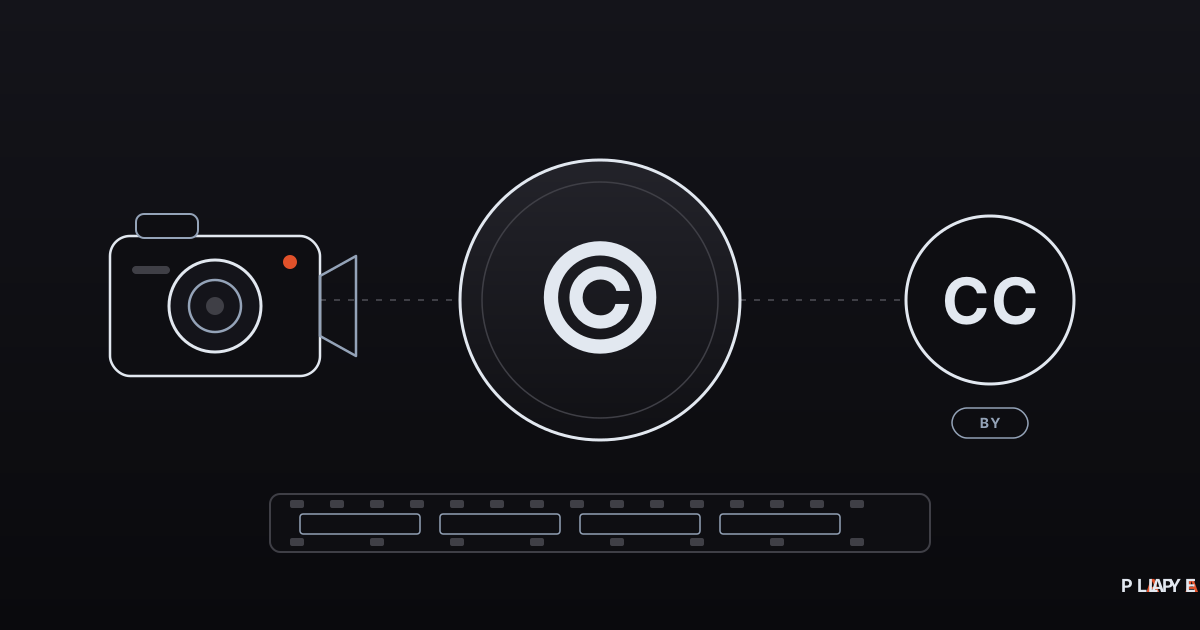
Short answer: Videos you film yourself generally belong to you, content you buy is watched within the license you received, and public-domain or Creative Commons works can be played as long as you follow their terms. With copyright and personal media, the rule of thumb is to play only what you can show you have the right to use. Alpa Player provides no content; it plays only such sources.
Key takeaways
- Videos you film yourself are generally yours, but music in them and the people who appear in them deserve separate thought.
- Content you buy or subscribe to is covered by the license you received, usually private viewing; sharing or public screening may need separate permission.
- Public-domain works and openly licensed material such as Creative Commons can be played if you respect the license; the Blender open movies are a good example.
- Being reachable online does not mean something is free to use.
- Alpa Player provides no content; the user adds only sources they have the right to use and is responsible for them.
Copyright and personal media is a topic everyone who uses a player runs into sooner or later. Can I play this video I have? Can I show it to someone else? Can I use something I found online? In short, you can safely play anything whose right of use you can clearly show.
This guide explains in plain language which kinds of content are lawful to play. Alpa Player, developed by Alpa Yazılım, is a player only: it does not provide, sell, or host content. This article is not legal advice. For specific situations, ask a qualified lawyer.
What is copyright and who does it protect?
Copyright is the set of rights an author or creator holds over a work such as a film, a piece of music, a photograph, a text, or software. It lets the owner decide who may copy, distribute, or publicly communicate the work.
In most countries, copyright arises automatically when a work is created, and you do not need to register anything to be the rights holder. For a global overview, the WIPO copyright pages are a good starting point. The details differ from one country to another, so always check the rules that apply where you live.
Do I own the copyright to videos I film myself?
You generally own the videos you film yourself, and you can play them as you like. A few points deserve attention, though.
- Music and works in the background: a song playing in your video, or someone else's artwork that appears in the shot, does not become yours. Playing a clip for yourself is different from publishing it online.
- People who appear in it: footage of people touches on privacy and personal rights, so think about it before sharing the video with others.
- Contracts and employment: if you filmed something as part of a job, an assignment, or a contract, who holds the rights may depend on that agreement.
To play your own videos in a player, you can place a video at an address you control and add it as a single video link. As always, the user is responsible for the lawfulness of the source they add.
How can I watch content I have bought?
You watch purchased or subscribed content within the license you received. Buying a film digitally usually means buying the right to watch it under certain conditions, not buying the copyright to the film itself.
That right normally covers private, non-commercial viewing. Reselling the film, sharing it online, or showing it in a public place is typically not part of a service's terms. Rules on things like making a personal backup of a disc you bought vary by country, so if you are unsure, read the service's terms and the law that applies to you. Official apps are the simplest option here, and our guide on how to spot a licensed streaming service helps you recognize them.
What are public-domain works?
Public-domain works are works whose copyright protection has expired or never applied, so anyone can use them freely. The length of protection differs by country, so you need to confirm that a work is in the public domain where you are.
A common misunderstanding is that anything available for free online is free to use. Being easy to find does not make a video public domain. If you cannot find a reliable source confirming that a film or video is public domain, it is safer not to treat it as free.
What do Creative Commons licenses mean?
Creative Commons (CC) licenses are standard licenses that let creators share their work with everyone under stated conditions. The conditions are shown as short abbreviations, and the full texts are on the Creative Commons licenses page.
| Abbreviation | Meaning | What you need to do |
|---|---|---|
| BY | Attribution | Credit the creator and indicate the license |
| SA | ShareAlike | Share anything you build from the work under the same license |
| NC | NonCommercial | Do not use the work for commercial purposes |
| ND | NoDerivatives | Do not share modified versions of the work |
For example, the Blender Foundation's open movies Big Buck Bunny, Sintel, and Tears of Steel are shared under the Creative Commons Attribution (CC BY 3.0) license, so you can watch and share them as long as you give credit. You can find more on the Blender Studio films page. The Alpa Player demo in your browser runs on openly licensed samples like these, and free test video streams lists further options.
Is watching at home the same as a public screening?
No. Watching at home with family is treated differently from showing something to the public in a cafe, hotel, school, or waiting room. Public screenings usually need separate permission or a license, and an individual subscription to a service may not cover them.
That is why a hotel, school, or municipality must hold the rights to what it shows, or obtain the right license. Lectures and information videos the organization produced itself are the easiest case. For related details, see a video platform for schools and hotel TV systems.
Can I download videos from social media and share them again?
Downloading a video published on social media or a video site and sharing it as your own often infringes both the video's rights and the platform's rules. A video being publicly visible does not give you the right to republish it.
The safe approach is to use the routes the publisher allows: the platform's own share button, written permission from the creator, or an open license. The same principle applies to downloaded films and music videos.
Which kinds of content are lawful to play?
The table below summarizes the common content types and what to watch for with each.
| Content type | Can I play it? | What to watch for |
|---|---|---|
| Video you filmed yourself | Yes | Third-party music and the people who appear in it |
| Content you bought or subscribed to | Yes, for private viewing within the license | Sharing and public screening are usually outside the license |
| Public-domain work | Yes | Protection terms differ by country; verify |
| Creative Commons work | Yes, following the license terms | Read the attribution and commercial-use conditions |
| Content an organization has the right to publish | Yes, through the organization | The organization is responsible |
| Content found online with no clear license | Uncertain; not safe | Being accessible does not mean it is permitted |
How do you document your right to use content?
The easiest way to document your right to use something is to keep whatever the right rests on. If you ever need to show that an item is yours or comes under a license you can use, a simple record makes that much easier.
- For things you bought: keep the receipt or invoice and the service's terms.
- For your own videos: keep the original files and recording dates, and keep permission emails for any third-party material such as music.
- For openly licensed works: note the link to the license page, the creator's name, and the license version, since you need them to give credit.
- For organization content: make sure the permission to publish or the content agreement is in the organization's records.
This habit gives you a clear answer to "why am I playing this?" even if you never face a dispute.
How do you play your own and lawful content with Alpa Player?
Alpa Player is a free media player that plays the source the user adds; the app contains no ready-made channels, films, series, or lists. You can add a playlist address, a single video link, an account from your service provider, or an institution account, and the content comes straight to your own device.
With remote upload through the website, the user enters the MAC address and 6-digit key shown in the app, adds their own source, and confirms a responsibility statement. Every upload is logged with the IP and MAC address, and the uploading user is responsible. Our overview are media player apps legal explains Alpa Player's position in more detail.
Organizations can offer lecture and information videos they have the right to publish to their own students and staff through the free institution panel. As a first step, you can download Alpa Player for free and play your own videos or openly licensed samples. For the wider picture, is IPTV legal sums up the difference between technology and content. This article is not legal advice; for detailed outcomes, ask a lawyer.
Frequently asked questions
Can I show a video I filmed to other people?
Generally yes, since you own the footage you filmed. If the video contains music or images belonging to others, or shows other people, think about those separately before sharing. Public screenings may also need extra permission. This article is not legal advice.
Can I watch a film I bought with friends or in a public place?
A license for purchased content usually covers private, non-commercial viewing. Public screening, sharing, and resale are normally outside that scope and may need separate permission. The exact terms are written in the service's conditions, so read them.
Can I play a Creative Commons video?
Yes, as long as you follow the license conditions. Most CC licenses require credit to the creator, and some forbid commercial use or sharing modified versions. The Blender Foundation's Big Buck Bunny, Sintel, and Tears of Steel are shared under CC BY 3.0, so you can watch them while crediting the creator.
How do I know whether a video I found online is free to use?
Being accessible does not make it free. Look for the license on the owner's own page, and unless it clearly says Creative Commons or public domain, do not assume it is free. If you are unsure, choose content whose license is clear.
What is a public-domain work and how do I verify it?
Public-domain works are those whose copyright has expired or never applied, and anyone can use them freely. Because the term of protection differs by country, confirm the status from a reliable source. If you cannot find clear information, do not assume a film or video is free to use.
How do I play my own content in Alpa Player?
Alpa Player provides no content. You can place your own video at an address you control and add it as a single video link. The app only plays the source you add, and you are responsible for its lawfulness. You can get the app from the download section.
Sources
Related articles
 Legal use
Is IPTV legal? Licensed vs unlicensed streaming
Is IPTV legal? The technology is; unlicensed content is not. Learn the difference, the risks, and the lawful ways to stream with Alpa Player.
 Legal use
Illegal streaming risks: legal, security, quality
Illegal streaming risks go beyond the law: malware, payment fraud, and data theft are real concerns. A calm, honest guide to what can go wrong.
 Legal use
Are media player apps legal? Who is responsible
Are media player apps legal? Yes, the software is; responsibility starts with the content. See how Alpa Player supplies none and logs every upload.